
Last updated: November 8, 2026
After a data breach, a lost wallet or a suspicious letter about an account you never opened, two free tools can help stop identity thieves from using your name: a credit freeze and a fraud alert. They work differently, and choosing the right one depends on how worried you are and how often you plan to apply for credit.
The short version
| Credit freeze | Fraud alert | |
|---|---|---|
| What it does | Blocks most lenders from seeing your credit report | Asks lenders to verify your identity before approving credit |
| Cost | Free | Free |
| How long it lasts | Until you lift it | 1 year (7 years if you’re an identity theft victim) |
| How to set it up | Contact each of the three bureaus separately | Contact one bureau; it notifies the other two |
| Effect on your score | None | None |
| Protection level | Strongest | Moderate |
How a credit freeze works
A credit freeze, also called a security freeze, restricts access to your credit report. Because most lenders won’t approve a new account without checking your report, a freeze makes it very hard for someone to open credit in your name. Federal law has made freezes free at all three national bureaus since 2018.
You need to place a freeze with Equifax, Experian and TransUnion individually, usually online in a few minutes. When you want to apply for a loan or card, you can lift the freeze temporarily or for a specific lender. If you request the lift online or by phone, the bureau must do it within one hour.
A freeze does not stop your existing creditors from viewing your report, and it doesn’t affect your credit score. It also won’t stop someone from misusing an account you already have, so keep watching your statements.
How a fraud alert works
A fraud alert stays on your report and tells businesses to take extra steps, such as calling you, to confirm your identity before opening an account. You only need to contact one bureau, which is required to tell the other two.
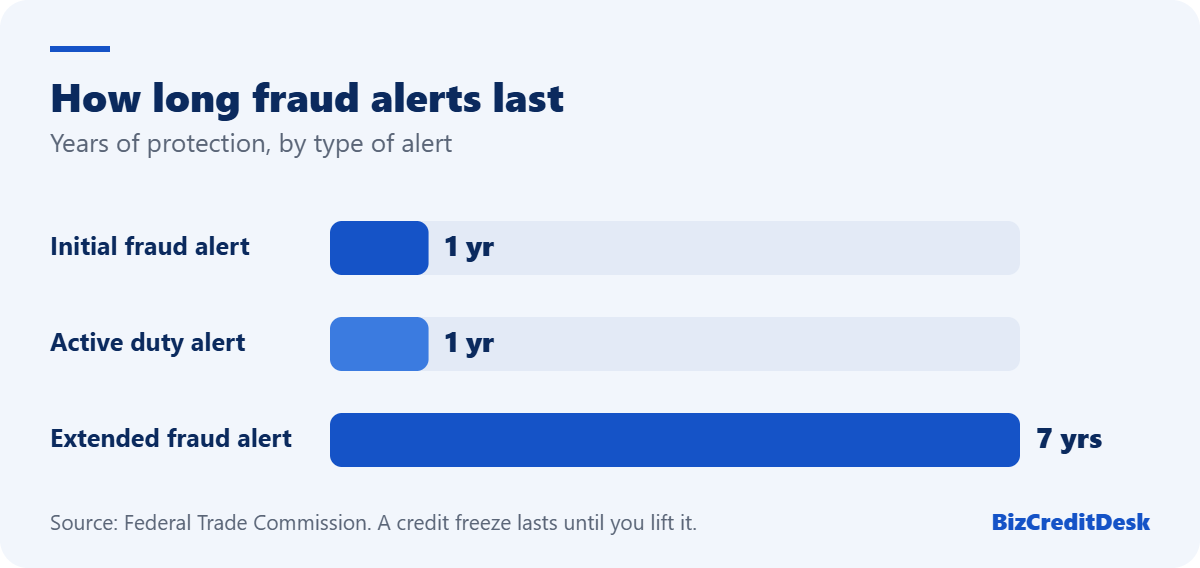
- Initial fraud alert: lasts one year and can be renewed. Anyone who suspects they may be a victim can place one.
- Extended fraud alert: lasts seven years and requires an identity theft report, which you can create at IdentityTheft.gov.
- Active duty alert: for service members deployed away from their usual station; lasts one year.
Which one should you choose?
- Choose a freeze if your Social Security number was exposed, you aren’t planning to apply for credit soon, or you want the strongest protection. Many experts recommend a freeze as a default for everyone.
- Choose a fraud alert if you are about to apply for credit, such as a personal loan, and don’t want to manage freezes, or if you want a quick first step while you gather information.
- Use both if you are already a victim of identity theft. An extended alert plus a freeze gives layered protection.
Steps to take after a breach
- Freeze your credit at all three bureaus.
- Pull your free reports at AnnualCreditReport.com and look for accounts or inquiries you don’t recognize.
- Turn on transaction alerts with your bank and card issuers.
- If you find fraud, report it at IdentityTheft.gov and dispute the errors with the bureaus.
Key takeaways
- Both tools are free and neither one affects your credit score.
- A freeze offers the strongest protection but must be set up at each bureau and lifted before you apply for credit.
- A fraud alert is easier to set up but only asks lenders to verify your identity.
- Identity theft victims can get a seven-year extended fraud alert.