
Last updated: November 7, 2026
If you have credit card debt and little or no savings, you face a classic dilemma: should every spare dollar go toward the debt, or should you build an emergency fund first? Paying off a 22% card feels like the obvious winner. But without any cushion, the next car repair goes right back on the card. The best answer for most people is a bit of both, in the right order.
Why this decision matters
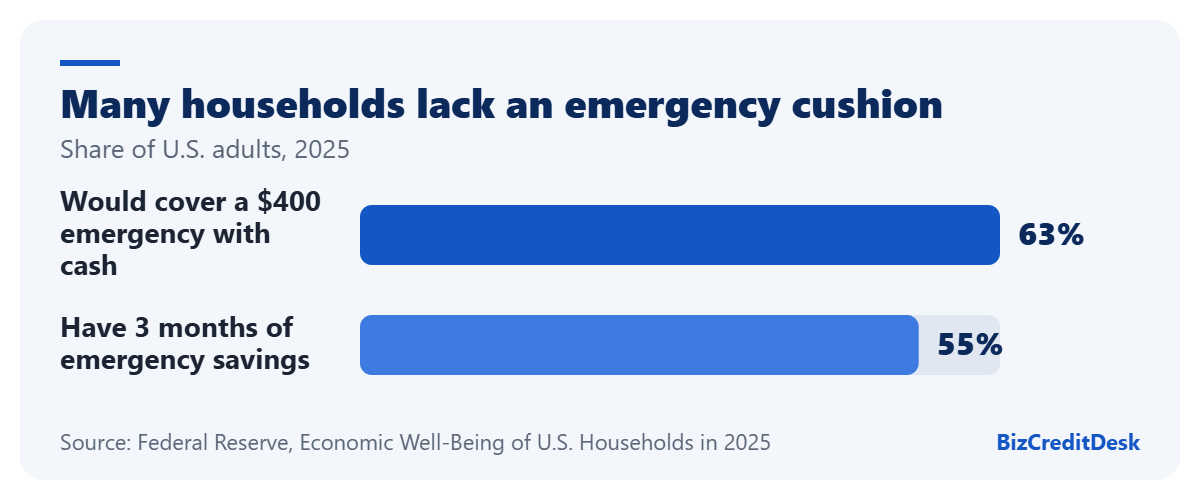
Many households are one surprise away from new debt. In the Federal Reserve’s latest survey, 63% of adults said they would cover a $400 emergency expense with cash or its equivalent, and 55% had set aside three months of expenses in an emergency fund (Federal Reserve). That leaves millions of people who would need to borrow, often on a credit card, when something goes wrong.
The case for paying off debt first
The math is clear: the average credit card rate on accounts charged interest was 22.36% in August 2026 (Federal Reserve G.19). Every $1,000 of card debt you carry for a year costs about $224 in interest, far more than that same $1,000 would typically earn in a savings account. Paying down the card is a guaranteed “return” that savings can’t match.
The case for saving first
An emergency fund isn’t an investment; it’s insurance. Without it:
- A surprise expense goes back on the card, undoing your progress.
- You may turn to high-cost options like payday loans. The CFPB notes a typical payday fee equals an APR of almost 400% (CFPB).
- You risk missed payments, which can damage your credit for up to seven years.
The balanced approach: a step-by-step plan
- Pay the minimum on every debt, always. Late payments cost fees and hurt your credit.
- Build a starter emergency fund. Aim for a small, realistic amount first, for example $500 to $1,000, or enough to cover the kinds of surprises you’ve actually faced. The CFPB suggests looking at your past unexpected expenses to set your goal (CFPB).
- Attack high-interest debt aggressively. Use the avalanche or snowball method to put every extra dollar toward your cards.
- Grow the fund once high-rate debt is gone. Work toward three to six months of essential expenses.
- Then focus on other goals, like lower-rate debt, retirement or bigger savings targets.
Adjust the plan to your situation
| If… | Then consider… |
|---|---|
| Your income is irregular or your job feels unstable | A larger emergency fund before paying extra on debt |
| Your debt has a very high rate (20%+) | Keeping the starter fund small and focusing on the debt |
| Your debt is low-rate (for example, under 7%) | Building a fuller emergency fund first |
| You have a 0% promotional balance | Saving while making sure the balance is paid before the promo ends |
| Your employer matches retirement contributions | Contributing enough to get the full match, if possible |
Where to keep your emergency fund
The CFPB recommends a place that’s safe, easy to access in an emergency and separate enough that you won’t spend it on everyday things. A savings account at a bank or credit union is generally one of the safest options (CFPB). Look for a competitive APY and deposit insurance.
How to find the money
- Automate it: set up a recurring transfer on payday, even if it’s small.
- Save windfalls: tax refunds, bonuses and gifts can jump-start your fund.
- Split your paycheck through direct deposit, if your employer allows it.
- Lower your interest costs: consolidating high-rate debt can free up cash for both goals.
Key takeaways
- Always make minimum payments, no matter what.
- Build a small starter emergency fund first to avoid new debt.
- Then pay off high-interest debt as fast as possible.
- Grow your fund to three to six months of expenses once expensive debt is gone.
Sources
This article is for educational purposes only and is not financial advice. See our Disclaimer.