
Last updated: November 8, 2026
When money is tight, an offer of fast cash with no credit check can look like a lifeline. Scammers know this. Fake lenders target people who need a loan, collect “fees” up front and then disappear. Knowing the warning signs is the best way to protect yourself.
The short version
| Legitimate lender | Scam “lender” |
|---|---|
| Checks your credit or income before approving | Guarantees approval, no questions asked |
| Takes any fees out of the loan or adds them to it | Demands a fee before you get any money |
| Accepts normal payment methods | Wants gift cards, crypto or wire transfers |
| Is registered in your state | Can’t be found on any state regulator’s list |
| Gives you time to read the terms | Pressures you to act today |
Fraud is a growing problem
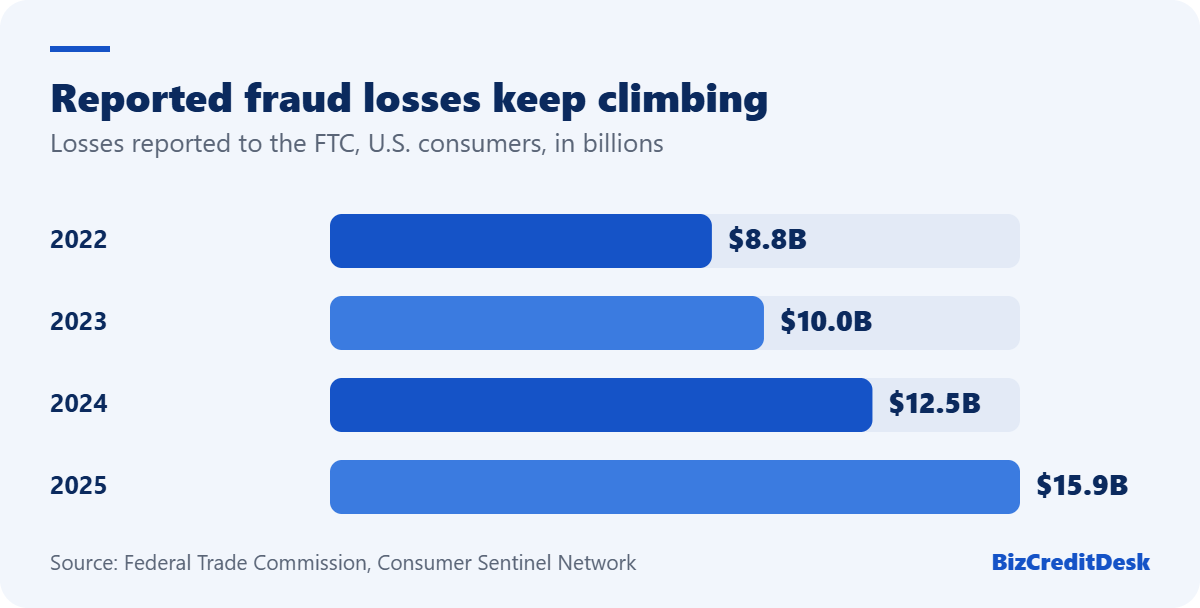
According to the Federal Trade Commission, consumers reported losing $15.9 billion to fraud in 2025, up from about $12.5 billion the year before. Reported losses are only part of the picture, because many victims never file a report.
7 warning signs of a loan scam
- An upfront fee. The most common loan scam asks you to pay for “insurance,” “processing” or “paperwork” before the money arrives. The FTC warns that it is illegal for companies doing business by phone in the U.S. to promise you a loan and ask you to pay before they deliver it. Real lenders deduct an origination fee from the loan itself.
- Guaranteed approval. Legitimate lenders evaluate your ability to repay. “Bad credit, no problem, guaranteed” is a red flag.
- Unusual payment methods. Requests to pay with gift cards, cryptocurrency, payment apps or wire transfers are almost always fraud, because that money is hard to trace or recover.
- Pressure to act now. Deadlines like “this offer expires in one hour” are designed to stop you from checking.
- Unsolicited contact. Be wary of loan offers that arrive by phone, text or social media message when you didn’t ask.
- No physical address or license. Lenders must be registered in the states where they operate.
- A website that doesn’t look secure. Check the address carefully for misspelled brand names, and never enter your Social Security number on a site you reached through an unsolicited link.
How to check a lender
- Look up the company with your state’s banking or financial regulator, or your state attorney general.
- Search the company’s name with words like “scam,” “complaint” or “review.”
- Check the CFPB’s consumer complaint database for patterns of complaints.
- Compare the offer with lenders you already know. Our guide on how to get a personal loan explains what a normal process looks like.
What to do if you’ve been targeted
- Stop all contact and don’t send more money.
- If you paid, contact your bank, card issuer or payment app right away and ask whether the payment can be reversed.
- Report the scam at ReportFraud.ftc.gov and to your state attorney general.
- If you shared your Social Security number or bank details, consider a credit freeze and visit IdentityTheft.gov.
Key takeaways
- A lender that asks for money before giving you a loan is a scam.
- No legitimate lender guarantees approval or asks for gift cards or crypto.
- Verify any lender with your state regulator before sharing personal information.
- Act quickly if you’ve paid: contact your bank and report it to the FTC.